


While I remain unconvinced by AI, it’s clear that more and more people are using large language models (LLMs) regularly to complete a huge variety of tasks. One area where LLMs seem to be growing their audience is search. Even if, like me, you personally don’t use LLMs, it’s likely your audience is using chatbots and AI assistants to navigate the internet and find your site. Let’s find out a bit more about what this means, especially if you are using traditional SEO.
What Is AI Search?
If you’ve used Google recently, then you’ve seen AI search in its most obvious form. It’s the panel of text that appears at the top of many search results, and it often tells you what you want to know without you having to click on any other pages. Instead of visiting the top results and sifting through the information yourself, Google AI gives you a summary of the main points in a little package instead.
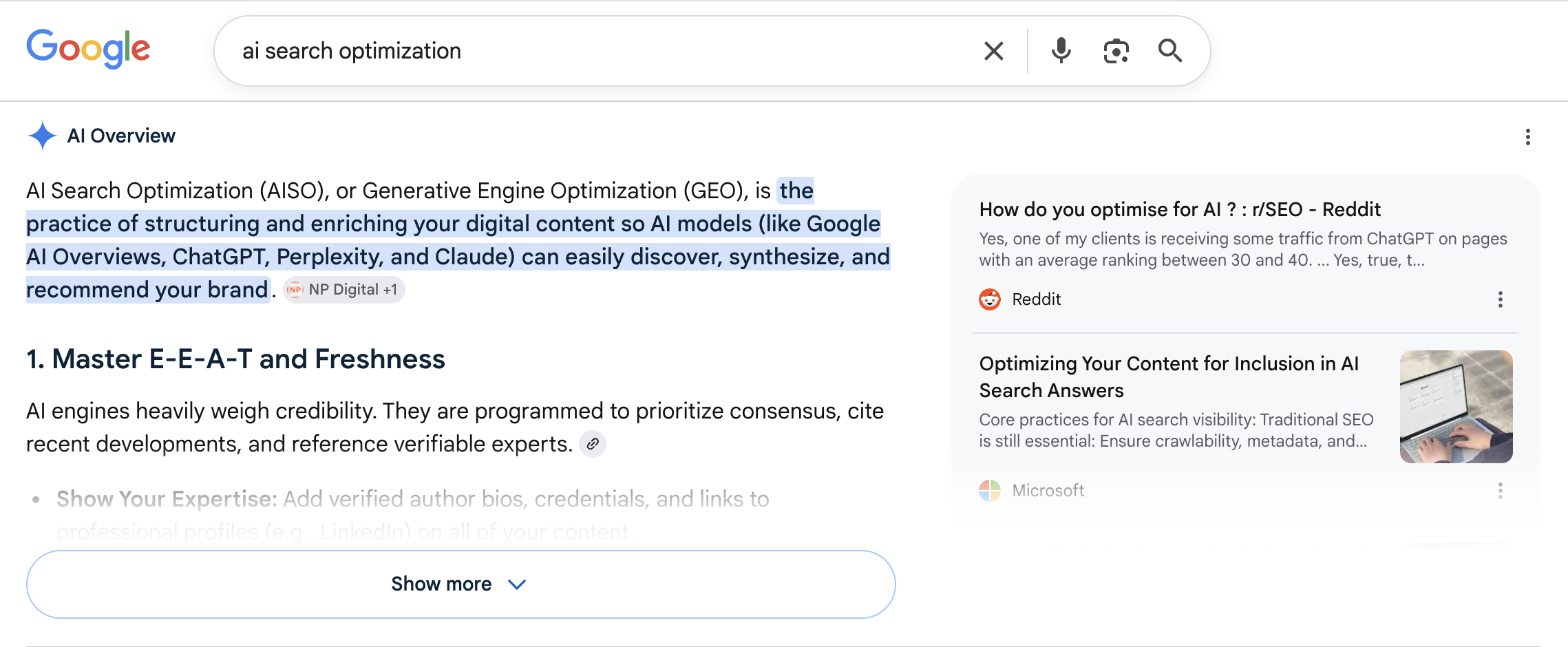
Another version of AI search is when people talk to an LLM directly. The user logs in to ChatGPT or Claude or whatever bot they prefer, and asks questions about a topic, eventually leading to the LLM giving them links to a handful of websites.
For example, maybe the user starts by asking how to improve their patio garden. The LLM gives them some tips, and the user asks for more information about which plants would work best for a planter or hanging basket. The user eventually decides to buy the recommended plants, so the LLM gives them links to sites that specialise in container gardening.
How Does AI Search Affect Websites?
If you have analytics on your website, you might have noticed a decline in traffic from September 2025. This is when the AI summary began appearing on Google, so lots of searches that used to result in clicks no longer did. In general, as more people use AI summaries or go directly to LLMs for information, most websites can expect to see lower organic traffic than they are used to.
However, it’s not all bad news.
While the AI summary means fewer visitors, the traffic that does come through is almost always of much better quality. Going back to our gardening example earlier, that user would have previously visited several sites to find the right flowers for the planters on their patio, but probably not bought anything straight away. Those clicks and views have been lost by the LLM providing the information all on one page. However, when the user decides to order some plants, they arrive on the container gardening store at the final point in the marketing funnel, when they are almost certainly ready to buy. If your conversion rate or average sales value is improving, you don’t need to worry too much about overall traffic dropping.
Another interesting side effect of the summary panel is that niche sites are more likely to be the top result. We have a client whose name is based on a well-known phrase, and searching for them before was tricky, as you’d often get results about the phrase instead. However, now the AI summary talks about the phrase, its origins and how to use it, and the top result is our client. Looking at their analytics, they have actually grown their organic traffic since AI summaries were introduced.
Optimising for AI Search Vs Traditional SEO
The next issue to consider is how to adapt traditional SEO strategies to work with LLMs. Making your site easy for LLMs to use and recommend is known as Generative Engine Optimisation (GEO) or AI Optimisation (AIO). There are slight technical differences between these two terms, but if you are just starting out, you can treat them as the same thing.
There’s not one single process that all LLMs use to find websites and rank them, so much like traditional SEO, there’s no definitive answer or strategy that is guaranteed to work. However, an interesting thing to note is that many LLMs seem to hook into search engines; we know that ChatGPT uses search results from Bing, and it’s rumoured that Claude has access to the Google search algorithm. Therefore, it’s very likely that using traditional SEO techniques to climb the rankings on standard search will also bring your website to the attention of LLMs.
How Do I Get LLMs to Index My Site?
The easiest way to get LLMs to index your site (especially if it is brand new) is to sign up to Google Search Console and Bing Webmaster Tools, and submit a sitemap. This helps the search engine crawl your pages, which will in turn alert LLM crawlers to your site.
Web crawlers (whether search or LLM) also follow links from other sites to find new pages to index, so having links from other reputable or high-ranking websites will really boost your profile. There’s also a theory that LLMs use things like TripAdvisor, Reddit mentions or other user-generated content, especially when it comes to recommending commercial websites. If customers consistently say nice things about you online and recommend you to others, LLMs seem to factor that in to the sites they link to.
Do You Need To Change Your SEO Strategy To Include GEO/AIO?
The really good news here is that you don’t need to radically alter your SEO strategy to make your site appealing to LLMs. Making sure your site is well-labelled, with descriptive and accurate metadata, and good use of headings, subheadings and other page markup is key. A page that has a clear structure with nicely organised content is really easy to scan through and find the relevant information, whether you are a human or a bot.
Demonstrate your Expertise and Experience
One thing you do need to keep in mind is that LLMs pull information from lots of sources, so your content will have to work hard to stand out. When you look at the websites cited in AI summaries compared to the search results, it’s usually a couple of top results and then some from further down the list that offer a different or more in-depth perspective. Using the gardening example again, more generic results like “Top 10 Gardening Tips” or “Best Plants for UK Gardeners” are likely to get skipped for more specific pages like “The Science of Container Planting for Beginners” or “Creating an Outdoor Room – How I Used Interior Design Hacks to Build the Ultimate Courtyard Garden”. Always try to write really niche posts on a topic you have real expertise in, or talk about your personal experience; this type of content is much rarer and therefore more valuable to LLMs.
Don’t Hide Information
This sounds obvious, but so many websites hide the information on their pages. For human users, this isn’t always a big problem. We’re used to clicking “Read More”, or using tabs or interactive elements to see different information – it’s much easier to read a size guide that pops up on a clothing site than it is to navigate to a new page, remember all the measurements and then go back to the original product we were looking at. However, some of these interactive elements only call the content when that part of the site is being used, meaning crawlers can’t easily access it. Similarly, avoid putting key data in downloadable documents – while LLMs can read these, PDFs and Word documents are much harder for them to understand.
Having videos or images on the page also helps, as LLMs seem more likely to recommend pages which contain information in different formats. However, video and images are hard for LLMs to really understand, so you need to include transcripts or alt text so the information contained in visual formats is obvious.
Don’t Duplicate Content
LLMs are also able to recognise linked words and topics, so they can understand that a user asking about patio plants is also interested in results that talk about containers, potted plants or courtyard gardens. This is great as it means you don’t have to duplicate content with slightly different vocabulary, which is time-consuming and can look spammy. Aim to have a smaller number of high-quality pages than lots and lots of repetitive or generic content.
Keep It Fresh
LLMs also value recent content over older information. It can be really hard to constantly make new content, so an easier way to keep your site looking fresh is to update older content. Adding a newer source, reflecting current prices or including a quick check-in on an ongoing project doesn’t take long, but means you can republish your old content as ‘new and updated’.
Is Shopify the Best for GEO/AIO?
There’s been a lot of chat about Shopify sites consistently doing well for LLM referrals. This seems to be true, but Shopify is not inherently better than other platforms.
Instead, it’s because Shopify sites are very highly structured. The vast majority of Shopify sites are e-commerce, and Shopify has always had a very good system for collecting data about the products for sale. When you create a product on Shopify, you are encouraged to include the weight, the size, the manufacturer, the materials it’s made from, and what the shipping costs are. You might be asked to input information about the target user, such as labelling if a piece of clothing is for men, women or children. Adding a barcode or SKU number means Shopify can cross-reference your product with information it might have from the manufacturer or other stores selling the same item, and it can instantly compare prices across millions of shops.
As a result, if our LLM user is asking about plants that will work for patio containers, that can be bought in the UK, that suit a certain budget and that can be delivered in time for the weekend, Shopify can provide all this data really easily and narrow down the options of stores that can supply the right items. Other e-commerce platforms will also have highly structured data, but might not yet be as comprehensive as Shopify. If you are running an e-commerce site on another platform, make sure you add as much data as you can about each product, ideally in a standardised format.
What About Sites That Aren’t E-Commerce?
While we love Shopify for e-commerce, if you aren’t selling things online, it’s not such a great platform. Shopify has much less structure around non-product pages, because these make up such a tiny amount of content for most e-commerce stores. There might be an About Us page or a blog, but even a small store may have hundreds of product pages, so it’s not surprising that Shopify focuses on product pages over static content.
If your website is promoting your services or encouraging people to visit you in real life, then we end up back at our previous point. A site that is well labelled with good structure is key. For example, if our patio gardener had asked for recommendations for garden centres they could visit tomorrow to talk to someone in person, then having opening hours, location and tag for ‘expert staff’ in your metadata will help the LLM find and recommend your business. Similarly, if they ask for a garden designer, the LLM will look for a company that covers the right geographical area, and has references to patios, urban gardens or potted plant expertise on their site.
Almost all common platforms, such as WordPress, Squarespace, Wix or Webflow, allow you to customise your metadata and put in structured schema items. You can also use other platforms, like Google Business Profiles or Facebook pages to reinforce basic info like opening hours and location.
Should You Optimise for AI Search?
While tech bosses are keen to tell us AI will change everything, they’ve also invested billions in it so they really need everyone to start paying to use AI soon. OpenAI (who make Chat GPT) have never posted a profit, and Anthropic (Claude) are projecting a profit for the first time in 2026 Q2, but planned investments will probably see them returning losses later in the year. AI feels very much like a bubble, and there will be a lot of pain when it bursts.
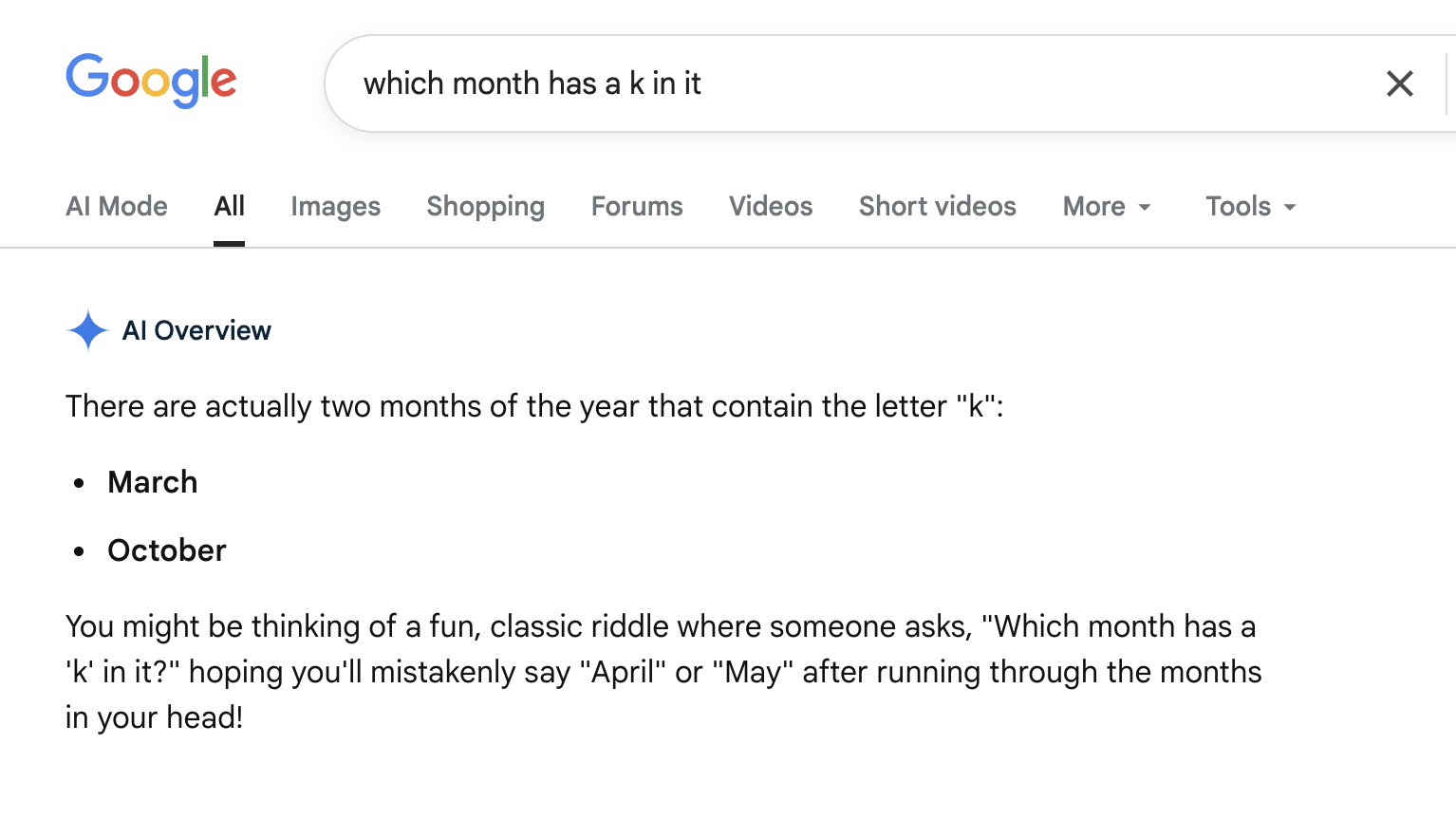
My opinion is that you shouldn’t do anything purely for AI. Doing good technical SEO work on your site will make your content more understandable for both general search and LLM crawlers, so no matter whether the AI trend continues, you’ll still get value from the improvement in your standard search rankings. Pure LLM search and referrals are only a small portion of internet traffic, with most users still coming through standard search, so your main focus should still be on traditional SEO day to day.
Growing traffic organically is also a long-term process, so even if you do decide to focus on AI search, you’ll need to monitor results over several months before reviewing your strategy.